
Non-Surgical Rhinoplasty in Dublin
An advanced, clinically-proven non-surgical nose reshaping procedure utilizing premium hyaluronic acid dermal fillers to correct dorsal humps, raise droopy tips, and optimize facial symmetry.
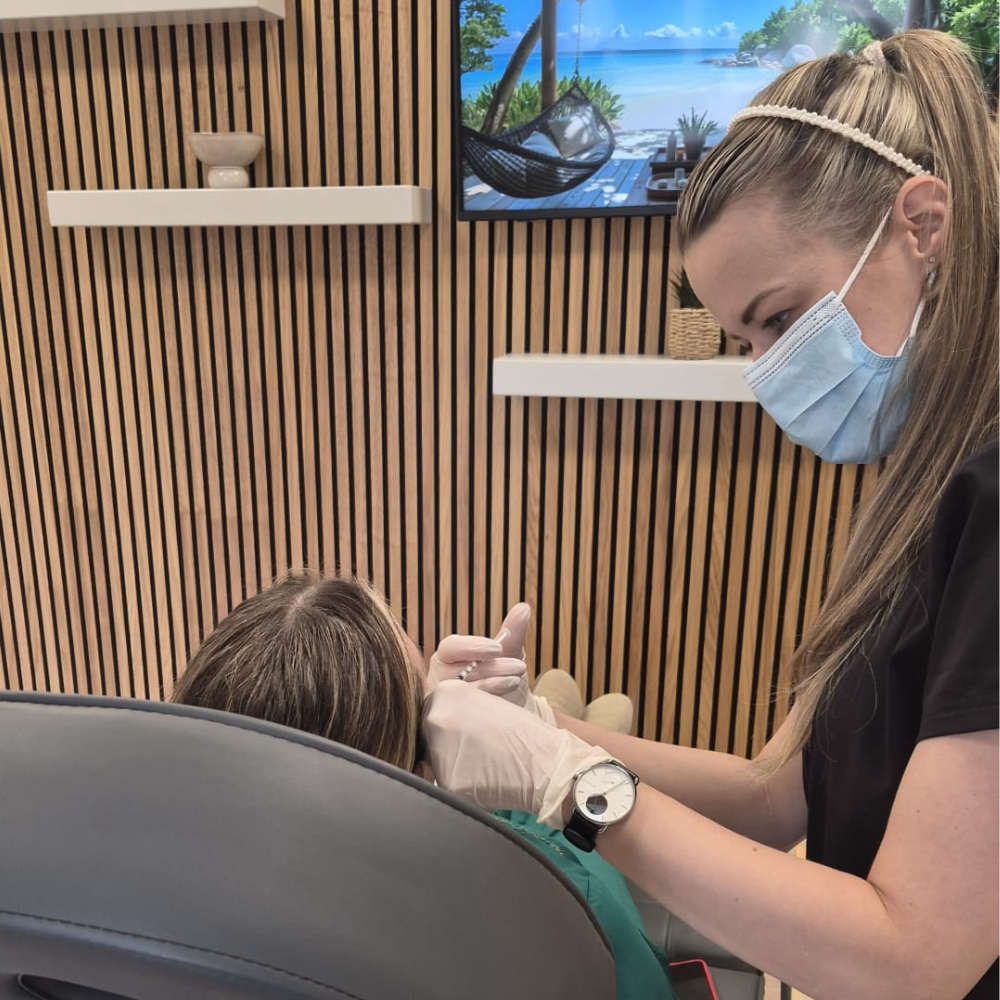
| What is Liquid Rhinoplasty? | A minimally invasive aesthetic procedure that temporarily alters the shape, profile, and symmetry of the nose using micro-injections of high-density hyaluronic acid dermal filler, avoiding the risks of surgical rhinoplasty. |
| Who is this suitable for? | Ideal for individuals seeking to smooth out a prominent dorsal hump, redefine a flat nasal bridge, correct minor post-surgical irregularities, or elevate a drooping nasal tip (nasolabial angle). |
| Recovery & Aftercare | Minimal to zero downtime. Most patients experience minor swelling or localized tenderness at the injection points, resolving within 24 to 48 hours. |
| Dublin Clinic Standards | Our Dublin clinic conducts nose filler treatments exclusively under doctor-led protocols by IMC-registered (Irish Medical Council) specialists prioritizing vascular safety. |
The Anatomy of Profile Harmony: Why Choose Nose Filler?
The nose sits at the center of facial geometry, heavily influencing how we perceive facial proportion and profile balance. Structural features such as a prominent dorsal hump, flat bridge, or a downward-pointing tip are common genetic variations. Traditionally, addressing these required an invasive surgical rhinoplasty (surgical nose job), which involves significant downtime, general anesthesia, and permanent structural modifications.
At Emerald Aesthetics Dublin, non-surgical rhinoplasty offers a precise medical alternative. Using soft tissue dermal fillers, our expert medical team can smooth curves, lift contours, and balance facial features without a scalpel.
⚠️ Common Nasal Profile Concerns
Understanding the anatomical variations that patients frequently choose to address with liquid rhinoplasty:
- Dorsal Humps: A localized cartilage or bone protrusion on the bridge that interrupts the profile line.
- Ptotic (Drooping) Nose Tip: A tip that points downward, which often becomes more pronounced during facial movements like smiling.
- Asymmetry & Flat Bridges: Insufficient projection of the nasal bridge or minor structural deviations.
✅ How Hyaluronic Acid Filler Resolves Them
The biomechanical process of reshaping the nose profile with dermal filler injections:
- Optical Smoothing of Humps: By injecting filler strategically above and below the dorsal hump, we level the bridge, creating the visual illusion of a perfectly straight nose.
- Nasal Tip Elevation (Rotation): Micro-doses of dermal filler placed at the anterior nasal spine and tip support the cartilaginous structure, physically lifting a droopy tip.
- Refined Bridge Projection: Carefully building up the radix (the top of the nose bridge) to improve overall facial definition.
Clinical Selection, Safety Profile & Indications
Patient safety in non-surgical rhinoplasty depends entirely on careful patient selection, precise knowledge of alternative pathways, and strict mapping of boundaries.
What Can Non-Surgical Rhinoplasty Correct?
- Dorsal hump
- Flat bridge
- Low radix
- Drooping tip
- Saddle nose (selected cases)
- Minor asymmetry
- Post-surgical irregularities
- Crooked appearance (visual camouflage only)
Not Suitable If:
- Severe nasal trauma
- Active infection
- Pregnancy
- Breastfeeding
- Autoimmune flare
- Unrealistic expectations
- Severe asymmetry requiring surgery
Possible Complications Include:
- Bruising
- Swelling
- Vascular occlusion
- Skin blanching
- Delayed inflammatory nodules
- Infection
Note: These complications are uncommon but require immediate medical assessment
The Medical Science: Safety & Vascular Anatomy of the Nose
From an aesthetic medicine standpoint, the nose is one of the most complex and high-risk zones on the face. It is fed by a dense network of terminal arteries connected directly to the ophthalmic system. This structural framework relies on careful navigation around critical vessels, including the Facial artery, Angular artery, Dorsal nasal artery, Lateral nasal artery, Columellar artery, and the Supratrochlear artery. Because of this intricate vascular network, non-surgical rhinoplasty should only ever be performed by fully qualified medical professionals who possess a deep understanding of facial anatomy.
During the procedure, maintaining strict Midline safety is paramount. Injections must be precisely delivered into the correct Plane of injection—specifically deep onto the Periosteum (over bone) or Perichondrium (over cartilage)—which lies safely underneath the vascular-dense Nasal SMAS layer. Our clinicians constantly evaluate deployment protocols using specialized Aspiration techniques and carefully select the appropriate toolset for each distinct structural zone, weighing the safety profiles of a Cannula vs Needle.
At Emerald Aesthetics in Dublin, we use only high-density, premium Hyaluronic Acid (HA) dermal fillers. These cohesive gels are specifically engineered to provide structural support, resisting compression from the overlying nasal skin while maintaining their position without migration.
Why Doctor-Led Treatment Matters
Nose reshaping demands extensive medical expertise to safeguard your vision and skin health. An IMC-registered doctor brings indispensable clinical training to every step of the procedure: • Thorough diagnosis and strict patient selection before any treatment begins. • Expert familiarity with hyper-complex vascular anatomy to avoid vessel boundaries. • Immediate complication recognition, such as identifying immediate skin blanching. • Advanced proficiency in emergency management protocols, including the immediate injection of high-dose hyaluronidase to instantly dissolve a blockage and restore blood flow.
